Crews rolling on the morning line — sweeps & brickwork across the valleyInsured • One Local Crew • Mon–Sat 7–7Call (909) 824-3260
Del Rosa • Verdemont • Highland • Loma Linda
A Railroad Town Builds Things to Take a Beating. Its Chimneys Deserve the Same.
This city ran the biggest yards west of Chicago on maintenance done right and on schedule — and that's the whole trade here: flues brushed to bare clay, joints packed full, caps bolted against the pass winds, with a mason on the phone six days a week, seven in the morning till seven at night.
Eight Cars on the Board, One Crew Coupling Every Job
No job gets handed down the line. The mason who quotes your figure is the one up on the roof, and his quote doesn't drift between the call and the invoice.
Mainline Flue Brushing
Rods walk the brush the full length of the flue, pass after pass, until the clay stops giving anything up — and every pound of soot leaves your house in a sealed drum.
The free read that opens every job on this board — and when a sale, a claim or a stubborn symptom needs proof, a lamp and camera go down the flue and bring back the picture.
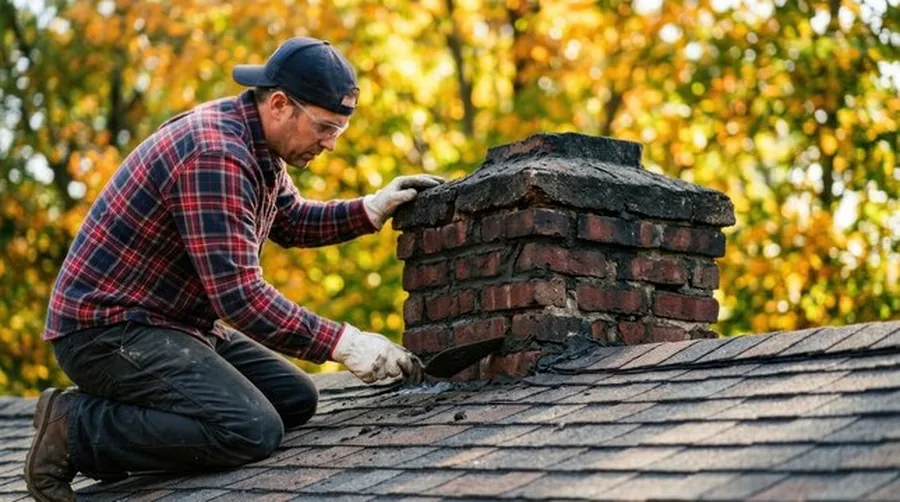
A stack the years have racked loose comes down to the last course still holding and goes back up dead square — beds filled, faces matched, a crown with honest pitch.
Valley sun and pass wind mill mortar out of its joints a season at a time. We grind back to solid bed, drive fresh mortar home and strike it clean — color-matched, softer than the brick.
Cajon Pass wind finds every loose cap in the county twice a year. Ours are heavy stainless, through-bolted into sound masonry, with collars that keep wind-driven rain out of the chase.
A brown bloom on the ceiling after the first storm means one open seam somewhere on the stack. We chase it with running water until it confesses, then close it for keeps.
Cracked clay and orphaned flues walk heat toward lumber a degree at a time. A single welded-seam stainless sleeve, sized to the appliance, takes the whole job back inside steel.
Spent back walls re-laid in firebrick, smoke chambers rendered smooth for honest draft, gas sets bedded right — the hearth brought back to working order.
Flying one of these flags?Ring while it's still a small flag. Whoever answers will give it to you straight — hold it for a quiet week, or send the next truck out — with no dressing-up either way.
The Timetable
Your Call to the Finished Job, in Four Scheduled Stops
Every job runs the same schedule in the same order, on time — and nobody highballs past a stop to save an afternoon.
1
Flag the Yard
Any morning but Sunday, 7 to 7, your call lands on a working mason. Describe it plain and take a slot.
2
The Highball
The whole system read, hearth up through cap, findings spoken before we climb down — free, start to finish.
3
Figures on the Board
Each repair chalked on its own line with its own price, urgent flagged apart from seasonal — and chalk here doesn't smudge.
4
Cleared & Rolled
Work finished to the spec quoted, the site swept down behind us, the warranty put in your hand in ink.
Before the Burning Season
Every Flue in the Valley Wakes Up the Same Cold Week. Book Ahead of It.
The first cold snap turns every neglected chimney into an emergency on the same Tuesday, and the board fills for a month straight. A call in the warm months rides ahead of that rush — sweep, cap and tuck-up done while the schedule still has room to breathe.
Every finished job hangs its placard on this wall — brushwork, caps, steel and fresh courses from across the division.
Round brush breaking through at the crownVacuum line walked over the ridgeTop courses dressed down — Del RosaNew cap seated above the valleyFace dust swept before the pointingHearth masked airtight before the brushGas set pulled and tunedInsert measured for its new steelFresh courses bedded — VerdemontSleeve trimmed at the chase — Highland
The Division
Rolling Out of Gifford Ave, Working the Whole Division
The yard sits in 92415 south of downtown; the daily rounds work the city's neighborhoods, the towns east along the freeway, and scheduled climbs into the mountains.
San Bernardino
Del Rosa
Verdemont
Muscoy
Arrowhead Farms
Devore
Highland
East Highlands
Redlands
Loma Linda
Mentone
Yucaipa
Calimesa
Crestline
Lake Arrowhead
Running Springs
Off the edge of this map? Call (909) 824-3260 — good work has pulled the truck past the printed line before.
Asked at the Platform
San Bernardino Chimney Questions, Answered on the Level
Free never means free. What does the zero actually cover?
Here it covers the whole run. The highball opens at the firebox, damper and throat, runs the flue top to bottom, and finishes above the shingles — crown, cap, screen, flashing, the brick itself — and ends with the mason telling you, face to face, what's solid, what's wearing, and what needs doing soon. No charge for any of it, no fuel fee tucked in behind. Money enters only if you order the waybill — the findings typed with photographs and a figure that stays put beside each repair, $149 — or hire the repairs themselves. Plenty of callers do neither, and that's fine by us.
Nobody picks up at ten o'clock — is the number dead?
It's alive, just off duty, and we'd rather print that than pretend otherwise. A person has the line from 7 each morning until 7 each evening, Monday through Saturday; Sunday the yard stands down. Call outside those hours and the machine takes your name — ring-backs start when the line reopens, earliest message first, before anything new that morning, and Sunday's go to the front of Monday. The standing order above all of it: fire you can see, smoke on the move, or a carbon-monoxide alarm crying means everyone gets out first and 911 comes before any number of ours.
The fireplace burns most winter weekends at our place. How often is often enough?
Regular burners earn the full schedule: a look every year, and a brushing whenever the soot says so rather than when the calendar does — for a weekend-burning household that usually lands annually. The look matters even in light years, because idle troubles don't care about your burn count: nests arrive, screens choke, crowns check in the sun. Gas logs ride the same yearly look, since they shed moisture and acids you can't see. One standing reset: a burn that ran away — roaring flue, hard sparking, flakes of black raining down — parks the fireplace until it's been inspected, whatever the date says.
We've got a cabin up the hill in Crestline. Do you work the mountain?
Every week of the season. The mountain towns — Crestline, Lake Arrowhead, Running Springs — burn harder than anywhere down the valley: wood stoves running daily from November on, which lays down creosote at several times the valley rate, plus snow sitting on caps and crowns half the winter. Cabin work has its own rules of thumb: stove pipes want cleaning on a shorter cycle than open fireplaces, caps need storm collars that shrug off ice, and crowns up there crack from freeze-thaw the flats never see. We schedule mountain runs in blocks, so flag your town when you call and you'll get a day the truck is already climbing the grade.
The brick on our 1920s place sheds orange grit you can crumble by hand. Is the chimney done for?
Usually not — but it's asking for the right repair, fast. The bungalow-era streets around downtown were built in a softer fired brick, and once its hard outer skin spalls away — frost, sprinkler spray or somebody's pressure washer usually starts it — the soft core wears quickly. The fix is matched to the era: cut back to sound material, swap the faces too far gone for reclaimed brick of the same bake, and point everything in a lime-leaning mortar that flexes instead of shearing the old faces off. What finishes these chimneys isn't age — it's hard modern mortar and the wrong sealers trapping water. We use neither.
Who's actually standing on my roof, and what happens if one of them slips?
Men from this yard, every time — hired slow, trained here, kept for years. Nobody gets pulled from a labor hall because the week ran long. Behind them sits current general liability and workers' compensation without a day's lapse, so a slip lands on our policy and never brushes yours. The certificate isn't a secret either: request it during booking and it reaches your email before we reach your street.
Does a sweep end with my living room wearing the soot?
Never has, and the method is why. Before a brush moves, the floor path gets covered, the hearth opening gets masked off airtight, and a filtered vacuum establishes a steady draw into the fireplace — every particle freed upstream rides that airflow down into the machine instead of out into the room. The visit for a standard flue runs near an hour, and the proof when we leave is all negative: nothing on the furniture, nothing in the air, no smell by dinnertime.
Gifford Ave is a long way from my street. Do you come out anyway?
The yard sits south of downtown in 92415, and the standing rounds cover every San Bernardino neighborhood — Del Rosa, Verdemont, Muscoy, Arrowhead Farms, the university district — plus Highland, Redlands, Loma Linda, Mentone, Yucaipa and Calimesa, with scheduled mountain blocks up to Crestline, Lake Arrowhead and Running Springs. Farther flung than that? Ask when you call — a solid day's work has carried the truck well past the printed edge plenty of times.
The Gifford Ave Yard
One Ring, and You're Talking to the Mason
No switchboard, no hold queue, no callback-maybe. The man who answers can size the job from your description, with the week's board right in front of him.
The yard790 S Gifford Ave, Unit B San Bernardino, CA 92415
The divisionThe city's neighborhoods, the east-valley towns & the mountain blocks
When the line is manned
Mon – Sat
Manned end to end, morning 7 to evening 7
Sunday
Stood down — the recorder posts you first on Monday's board
A mason mans this line
Say What You've Spotted. Get the Straight Answer.
The damp patch that returns with rain, the cap that chatters when the pass wind runs, the grit that keeps landing on the grate — lay it out however it comes to you. Before the call ends you'll have a ballpark figure, an honest read on the urgency, and a day a truck can come by.